Tuesday, November 21, 2017

Xbox One X - worth an upgrade?


Microsoft has launched Xbox One X. With enough hardware to power a high-end gaming PC Xbox One X is the most powerful console that is available today. Microsoft and Sony have been striving for console supremacy, and the Xbox One X could be the best bet for Microsoft to achieve its supremacy over consoles.


Thanks to Microsoft we’re seeing mid-cycle upgrades as opposed to new, next-gen consoles. This change has the potential to shift the gaming landscape significantly. Instead of completely new consoles phasing out the previous generation, it will allow a wider range of consumers to adopt and stay locked into an ecosystem for much longer instead of having to start with a clean slate on a new console.


The first thing you notice when you see the Xbox One X is its smaller profile. While packed to the brim with more powerful components, it’ll take up less space on your shelf. They even managed to stuff the power supply into the chassis, and the Xbox One X is a feat of engineering and design. It is, however, noticeably heavier despite the smaller dimensions.


C
ertain games will be available in “Enhanced” versions. This could mean having all or some combination of the following enhancements: 4K resolution, HDR support or a faster framerate. Playing games with true 4K resolution and HDR support is a sight to behold — games look absolutely gorgeous. And being able to play games at 60 frames per second (FPS) was a joy, and you certainly notice the difference when you see 60 FPS compared to 30 FPS.


Even if a game does not offer an “Enhanced” version with better graphics, one of the bigger, less heralded benefits is the faster load times. In many instances, load times were cut nearly in half, which is no small feat. Slow loading screens are the bane of gamers everywhere, and these shorter loading screens are wholly appreciated.


The Xbox One X comes with a 1TB hard drive (less than 800 GB is available for you to use), and the new “Enhanced” Xbox titles take up a lot of space due to the added 4K assets, so you will more than likely need an external drive to store all of your games. Xbox One titles typically take up 40 GB of space, and the “Enhanced” titles regularly exceeded 70 GB.


Another advantage that the Xbox One X has over the PS4 Pro is the addition of a 4K Blu-ray drive, whereas the PS4 Pro has just an HD Blu-ray drive. Sure, both consoles can stream content in 4K, but 4K Blu-ray discs offer considerably better image quality. 4K Blu-ray players are not cheap and the difference in quality can make a noticeable difference compared to an HD version. Having a 4K Blu-ray built into the Xbox One X makes it a more future-proof option.


Microsoft has created the most powerful console ever built and it’s not even close. The Xbox One X is significantly more powerful than the PS4 Pro and it doesn’t look like Sony will overtake them anytime soon. If you’re looking for the absolute best graphics on a console, look no further than the Xbox One X (provided by Microsoft for review). While there are still a limited number of “Enhanced” titles that take advantage of the new Xbox’s powerful hardware, that list continues to grow.

If you’re thinking of buying an Xbox One X, you must have a TV capable of taking advantage of the new Xbox’s two key features: 4K resolution and high dynamic range (HDR) color. I cannot stress the importance of having the right TV if you’re thinking of buying an Xbox One X. If you don’t have a TV capable of supporting 4K HDR, you’re better off waiting until you’re able to do so as you won’t be able to take advantage of some of the console’s best features.

 If you want to buy an Xbox one X check the link
 

If you liked this post follow my blog and share it on your favorite social media.

If you have any inputs/queries post it in the comments, thank you.     


Monday, November 20, 2017

How to Search Videos within a YouTube Channel on your Mobile Phone


YouTube is probably the second largest search engine after Google. It offers extremely powerful search commands but there’s one important search functionality that YouTube is yet to include in its mobile app for both Android & iPhone.

We cannot search for videos within a specific YouTube channel while using YouTube on a mobile phone or tablet. For instance, if you would like to search for Tesla videos that were uploaded on the MKBHD channel, you simply can’t do that from your mobile phone.


This search-within-channel feature has been available for long on YouTube’s desktop website – see screenshot – but none of the YouTube apps have it yet. This is surprising considering the fact that more than half of video views on YouTube now come from mobile devices.


That’s where this mini YouTube search engine from labnol can help. Sign-in with your YouTube account, enter a search query, select any YouTube channel that you are subscribed to and it will show a list of all matching videos within the selected channel.


The app builds a list of all channels that you are currently subscribed to and prepares a nice drop-down with the channels sorted by name. The drop-down also features the channel icons so it is easier for you to find the channel you are looking for.


Also, if you have multiple YouTube accounts, you can click the “Logout” link to sign-out from the current account and log in to any other account. The app requests read-only access to your YouTube account and does not store any of your data anywhere.


If you are a desktop uses, you’ll probably never need this site but for mobile users, mini YouTube search engine from labnol could be worth bookmarking until YouTube incorporates this missing feature to their native apps.


If you liked this post follow my blog and share it on your favorite social media.

If you have any inputs/queries post it in the comments, thank you.     


Tuesday, November 14, 2017

Engine transmission- An overview of types of transmission, advantages & disadvantages.

Audible

Transmission refers simply to the gearbox that uses gears and gear trains to provide speed and torque conversions from a rotating power source to another device. There are two types of transmission mainly Manual transmission and Automatic transmission.


A manual transmission, also known as a stick shift or manual gearbox, is a type of vehicle transmission that requires the driver to manually shift gears.


Advantages of manual transmission:

•Driving with manual transmission gives you more control of the vehicle because you shift the gears. It will be easier to slow down or stop when you drive a manual vehicle.

•Manual transmission requires less maintenance and is cheaper to repair.

•Manual vehicles are more fuel-efficient than their automatic counterparts.

•Manual vehicles are less likely to be stolen because they are not as popular as automatic vehicles.


Disadvantages of manual transmission:

•Driving a manual transmission vehicle can present more safety challenges because it requires the driver to take one hand off of the wheel.

•The driver of a manual transmission vehicle has to constantly work three different foot pedals: the clutch, the brake, and the accelerator.

•It is much more difficult to learn how to drive a manual transmission vehicle.

•It is difficult to sell a manual transmission vehicle.


Automatic Transmission:-          

An automatic transmission, also called auto, self-shifting transmission, , is a type of transmission that can automatically change gear ratios as the vehicle moves, freeing the driver from having to pressing the clutch and shift gears manually. Like other transmission systems on vehicles, it allows an internal combustion engine, best suited to run at a relatively high rotational speed, to provide a range of speed and torque outputs necessary for vehicular travel.


Here are the main advantages of an automatic transmission:

•Vehicles with automatic transmission are a lot easier to use because the transmission will do the gear shifting for you.

•Automatic vehicles allow you to keep both your hands on the steering wheel for added safety in driving.

•Driving an automatic vehicle facilitates greater comfort for the driver because his feet have to work just two pedals – the accelerator and the brake.


An automatic transmission presents disadvantages, too, including the following:

•Automatic vehicles are more expensive than manual transmission vehicles. They are also more expensive to maintain and repair.

•An automatic vehicle depends on the torque convertor to switch gears, making it less fuel-efficient.


If you liked this post follow my blog for more such posts and share it on your favorite social media.

If you have any inputs/queries post it in the comments, thank you.     


Wednesday, November 8, 2017

Ducati showcases 7 new models at Ducati world premier 2018

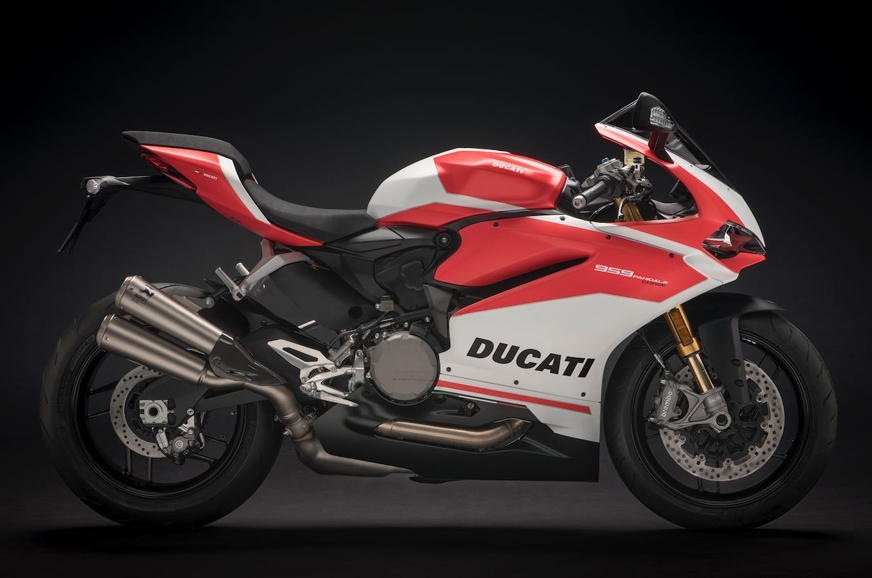
Ducati showcased seven new motorcycles at its Ducati World Premier 2018, including big ones like the all-new V4 Panigale, Scrambler 1100, and the Multistrada 1260. While the Scrambler Mach 2.0, the Monster 821 and the white colour XDiavel S were also showcased, another new unveil was the 959 Panigale Corse. Following are the details.
 
959 Panigale Corse

 For 2018, Ducati has given its smaller Panigale 959 the Corse treatment. The highlight feature on this middleweight supersport motorcycle is suspension, which comprises of a fully adjustable Ohlins NI30 43mm fork, a TTX36 rear monoshock and an adjustable Ohlins steering damper. Helping reduce the overall weight by 2.26kg is the new Akrapovic exhaust and a lithium-ion battery. And of course, like the 848 Corse models before it, the 959 Corse arrives with a special racing colour scheme. Power figures remain unchanged for the Corse, and it continues to make 150hp at 10,500rpm and 102Nm of torque at 9,000rpm from its 955cc engine.
 
Scrambler Mach 2.0
 The Mach 2.0 gets a new retro paint job on the fuel tank. Other cosmetic bits include a seat borrowed from the Scrambler Flat Track Pro, blackened exhaust cover and engine heads and brushed fins borrowed from the Scrambler Café Racer. The only functional change is a lower cross-section aluminium handlebar. Propulsion will be provided by the same 803cc L-Twin engine as the rest of the Scrambler range, with a power and torque output of 73hp at 8,250rpm and 67Nm at 5,750rpm, respectively. The Mach 2.0 will run on Pirelli MT 60 RS tyres, front and back.

 
Accompanying the introduction of the Mach 2.0 will be the updated Scrambler Full Throttle. It will feature a handful of cosmetic changes only – marginal ones – such as a chequered pattern on the yellow stripe on the side panel on the fuel tank.
 
2018 Monster 821

 The 2018 Monster was completely unveiled last month, it uses the headlight from the Monster 1200, but one of the bigger upgrades comes in the form of a colour TFT instrument cluster. The 821 continues with the same 821cc, 90 degree V-twin but it now makes slightly less power and torque on account of becoming Euro 4 compliant. Peak power is now 2hp down to 110hp while torque drops from 89.4Nm to 86Nm. Braking is handled by dual 320mm front discs slowed by powerful Brembo M4.32 callipers. The Ducati Safety pack continues to offer three levels of ABS, eight levels of traction control and three riding modes. However, the six-speed gearbox now gets a bi-directional quickshifter like we experienced on the SuperSport S.
 
Iceberg White xDiavel S

 Ducati had previously unveiled its 2018 xDiavel S in a new ‘Iceberg White’ colour. This will be the first xDiavel model offered without a dark colour scheme.
 
All-new Panigale V4
 Ducati has unveiled its all-new V4-powered Panigale flagship. The bike is available in three trims – base, S, and the limited-edition Speciale – and will be the first mass-produced Ducati bike to have a four-cylinder engine (with the exception of the low-volume production Desmosedici), leaving behind its traditional L-Twin format. Ducati has claimed output figures of 214hp and 123.5Nm of torque for its MotoGP-winning, Desmosedici-derived engine that powers its performance flagship.
 

The 1,103cc V4 engine on the Panigale uses the same 81mm bore as the MotoGP bike, with a longer stroke for improved low- to mid-range torque. The engine comes with a power figure of 214hp at 13,000rpm and 123.5Nm of torque at 10,000rpm, which can be further boosted to 226hp by mounting the all-titanium racing exhaust, made by Akrapovic as per Ducati Corse specifications. Mated to this engine is a six-speed gearbox with Ducati Quick Shift (DQS) up and down.
 
Weighing in at 64.9kg, the V4 motor is just 2.2kg heavier than the 1,285cc L-twin on the 1299 Panigale it replaces. To limit weight, all engine casings are made of die-cast magnesium and the same material has been used to make the cam covers, the oil sump, the alternator cover and the two-piece clutch cover. The Italian bike maker has also developed a new frame where the engine itself has a load-bearing function. Called Front Frame, it's more compact and lighter than a perimeter frame and uses the engine as a stressed chassis element. The new frame and the use of light materials keep the kerb weight of the S and Speciale versions down to 195kg, while the base model tips the scale at 198kg. This gives the new Ducati a power-to-weight ratio of 1.1hp/kg, setting a new standard in the supersport production bike segment.
 
The base V4 comes with a 43mm Showa Big Piston Fork (BPF), fully adjustable for preload, compression and rebound damping up front and a fully adjustable Sachs shock at the rear. The S and Speciale use Öhlins NIX-30 fork, rear shock and steering damper, with electronic semi-active control. The suspension and steering damper are controlled by the Öhlins Smart EC 2.0 second-generation control system, featuring Ducati’s new Objective Based Tuning Interface (OBTi). The electronic suspension offers the choice between manual mode or an automatic semi-active 'Dynamic' mode. In Dynamic mode, the system automatically adjusts compression and rebound damping in response to the rider's inputs and the road or track surface.
 
The 2018 Panigale range is equipped with a new 5.0-inch high-resolution screen and the latest-generation electronic package with six-axis Inertial Measurement Unit (6D IMU), ABS Cornering Bosch EVO, Ducati Traction Control EVO (DTC EVO), Ducati Slide Control (DSC), Ducati Wheelie Control EVO (DWC EVO), Ducati Power Launch (DPL), Ducati Quick Shift up/down EVO (DQS EVO) and Engine Brake Control EVO (EBC EVO). The brakes on the motorcycle are the Brembo Stylema monobloc calipers - the latest evolution of the M50. The new Ducati has four-piston calipers with 330mm discs in the front and a single 245mm disc with a two-piston caliper at the rear.
 
The Speciale variant is limited to only 1,500 units and comes with a different colour scheme, carbon fibre mudguards, Alcantara seat, Akrapovič exhaust system, racing screen and a few other exclusive bits.
 
New Multistrada 1260
 get the older, 1,198cc motor) courtesy a 71.5mm longer stroke and produces 158hp at 9,500rpm, a 6hp increment over the MY17 Multistrada which produced peak power at the same rpm. Torque, too, has gone up by 1.5Nm, bring the tally up to 129.5Nm at 7,500rpm. This new motor features Desmodromic Variable Timing (DVT), which, paired with Desmo valve actuation, results in good low-rev torque (and hence, rideability), an optimal power output while making it Euro-IV emissions norms compliant.
 

The Multistrada 1260 will be available in four variants, with the S, the S D|air and the Pikes Peak completing the line-up. The S D|air is a new addition to the Multistrada family and features a wireless connection to the motorcycle which triggers the Ducati D|air by Dainese protective armour in just 45 milliseconds, proving vital in the event of a crash. Like before, the standard 1200 makes do without the Ducati Skyhook Suspension (DSS), although all the models, barring the Pikes Peak, feature the same, 48mm fork and a fully-adjustable Sachs monoshock (the Pikes Peak gets an Ohlins unit).
 
Updates to the chassis include a swingarm which is 48mm longer, and an increase in the steering rake from 24 to 25 degrees; this has resulted in a longer, 1,585mm wheelbase, up by 56mm on the previous model. This should contribute noticeably to the Multistrada’s high-speed stability, and it’s important to note that its weight, at 209kg (dry; 212kg for the S, 213kg for the S D|air) has remain unchanged, although the Pikes Peak variant has shed 2kg over its predecessor, weighing in at 206 kg, dry.
 
The Multistrada has always been loaded with good electronic kit and assists, and the 1260 goes a step ahead with its cornering ABS, back-lit handlebar controls and automatic turn-signal cancellation in addition to four riding modes (Sport, Touring, Urban and Enduro), Ducati Wheelie Control, cruise control and hands-free connectivity. An important addition is that of Vehicle Hold Control (VHC), a standard feature that’s part of the new ABS unit. In effect, this holds the bike steady by activating the rear brake (for a period of nine seconds, after which it automatically deactivates if unused). This is something that will be of immense helps in tricky, uphill riding conditions, particularly off the road. Ducati should introduce VHC to the off-road-biased Enduro, too, where its contribution will be invaluable.
 
Scrambler 1100
 Visually, the most striking design departure from the regular Scrambler is the twin underseat exhaust setup which is reminiscent of the Monster family. This is also what primarily adds to its apparent deviation from old-school scrambler design. The 1100 is about more than just its visual appeal, however, since it features an all-new twin-upper-spar steel-trellis frame to accommodate the bigger motor (and the resultant increase in performance, too).
 

Responsible for the 1100 moniker is a 1,079cc, L-twin motor that produces 86hp at 7,500rpm and 88Nm of torque at 4,750rpm, a noticeable increment from the regular Scrambler 803cc motor that puts out 74hp and 67Nm of torque. This motor is paired to a six-speed transmission and features ride-by-wire as well.
 
The 1100, unlike the 800, is big on electronics and features a comprehensive technology package (courtesy Bosch) that includes ABS, cornering ABS and a four-level traction control system. Standard equipment also includes three riding modes – Active, Journey and City. Active is the full-power mode with no restrictions to the throttle response and sets the traction control to a level most conducive to enthusiastic riding. The Journey mode is better suited to the highway, and while it doesn’t alter the power output, it does smoothen the throttle response while also engaging a higher intensity of traction control. On the other hand, City mode cuts power down to 75hp and engages the highest level of traction control, making it suitable for urban conditions where the additional power output may seem unnecessary.
 
Mechanical changes to the Scrambler 1100 include a steering head angle of 24.5 degree (up by 0.5 degree), although the trail remains unchanged at 110mm, which should help it retain its agility while making directional transitions a lot more linear than on the base Scrambler. That said, at 205.9kg (wet), the 1100 is 20kg heavier than the base Scrambler, but still 1.1kg lighter than the Desert Sled. Importantly, the Scrambler 1100 features a 14.7-litre fuel tank (13.5 on the 800) which should provide it with a decent overall range.
 
The Scrambler 1100 will be available in three variants – the standard, the Sport (a more custom-racer profile) and the Special (on the lines of a modern classic and also the heaviest of the lot, at 210.9kg) – all of which are identical in terms of engine output but bear changes to cycle parts and cosmetic elements. The standard and Special 1100 variants features a fully adjustable 45mm USD fork from Kayaba and a preload/rebound-damping adjustable monoshock; the Sport also gets both, but from Ohlins. Radial-mounted twin-disc brakes with four-piston Brembo M4.32B calipers are standard equipment across all variants.
 
The 1100 also features new, wire-spoke wheels which are shod at either end with Pirelli Enduro rubber. The front end gets a 120/80-ZR18 while the rear gets a chunky 180/55-ZR17 tyre that should serve you well on most kinds of terrain, barring extremes.
 
There’s more. The Scrambler 1100 also gets the expected updates to its trim, which means a new headlight with a prominent ‘X’ pattern housed within, as well as an LED ring around the circular daytime running lamp. Another welcome update has been to the instrument console that now sports a secondary oval element in addition to the circular single pod. This now splits the read-outs, with the latter displaying the tachometer, riding mode, traction control level, dual tripmeters, fuel level, a ‘distance to empty’ indication and air temperature. The inset element displays the speed and is programmed to display info from the Ducati Multimedia System, available as an accessory with the optional Bluetooth package.
 
If you liked this post follow me on Google+ for more technology based blogs and share it on your favorite social media.
If you have any inputs/queries post it in the comments, thank you.     


Tuesday, November 7, 2017

Oneplus 5T everything you need to know


OnePlus 5T will be launching on November 16. OnePlus, on Monday, confirmed that they are going to announce the long time rumoured and the successor of the OnePlus 5 at an event which is to take place in New Your City on Nov 16 - as teased earlier. The company said that the OnePlus 5T launch event will not be just restricted to the media members, but OnePlus fans can also attend it, but for that they will need to pay $40, which the company claims to give away as charity. The launch event will be live streamed and can be seen from anywhere around the world.


Alongside the launch date, OnePlus CEO Pete Lau revealed the estimate pricing of the OnePlus 5T. Lau took to Weibo - Chinese micro-blogging site to reveal the pricing details of the OnePlus 5T. It is noteworthy that this may not be the exact price of the device, and is subjected to change at the launch. But what is confirmed is the OnePlus 5T may cost somewhat close to the tipped price tag. As mentioned by Lau, OnePlus 5T may be slightly expensive than the OnePlus 5, and could cost under CNY 4,000, which roughly translates to $575/Rs 37999 . This price is for the 8GB variant. Good news is that OnePlus decided to retain the 3.5mm audio jack in its upcoming flagship smartphone. The audio jack is the only thing confirmed about the upcoming device.

OnePlus 5T may sport a 6-inch Optic AMOLED screen in the 18:9 aspect ratio with FHD+ resolution. Just like other smartphones with ultra-wide screens, the OnePlus 5T is reported to sport a fingerprint scanner on the back to allow the phone to accommodate a big screen on the front with small bezels.

Recently, in a photo post uploaded on Twitter by Evan Blass, a famous tipster known for sharing inside information from technology space, the upper front side of the still unconfirmed OnePlus 5T was revealed.

Other photo renders of the smartphone revealed chassis similar to the one in OnePlus 5. Even the speaker placement, USB type-C charging and data transfer port, 3.5mm audio jack and bottom mounted speaker may see no change in placement.

The smartphone’s benchmark report on Antutu hints at the specification of the upcoming device. According to the benchmark report, the OnePlus 5T might not see major changes and is reported to run on the Qualcomm Snapdragon 835 processor, coupled with 8 GB RAM and 128 GB internal storage. However, the report also hints that the new phone would sport an upgraded dual camera set-up with 20-megapixel lenses powering both the sensors this time, instead of the 20+16 MP setup in the OnePlus 5. Also, with a 6-inch screen in 18:9 aspect ratio, the resolution will take a bump to FHD+ and the phone will have a bigger battery than its predecessor.


If you want to buy oneplus 5T then check out the link.


If you liked this post follow me on Google+ for more technology based blogs and share it on your favorite social media.
If you have any inputs/queries post it in the comments, thank you.     


Monday, November 6, 2017

Cool new features of Iphone X


IPhone x comes with various cool features and I have listed 5 of the coolest features, check them out.

The edge-to-edge OLED screen is gorgeous


The most obvious standout feature of the iPhone X is the OLED screen, which is the best ever seen on an Iphone. The edge-to-edge display is copied from past Android devices like Samsung galaxy S8, LG G6, Mi Mix etc,. But the lack of originality hasn’t stopped Apple from manufacturing a beautiful piece of hardware.


There are some weird quirks to contend with, like the controversial rectangular “notch” cut-out at the top of the screen, where Apple has stored camera and sensor parts to perform tasks like Face ID and Animoji recordings. But Apple’s proprietary advantages include the coloration and brightness-adjusting True Tone display tech and a new Super Retina moniker that means the iPhone X sports a 2436 x 1125 resolution at 458 ppi across 5.8 inches of real estate. It’s also Apple’s first smartphone to come HDR-ready. All this adds up to an impressive display that is clearly the top differentiator between the iPhone X and the iPhone 8.


The front-facing camera is the best ever on an IPhone

Hidden in the notch cutout at the top of the iPhone X is a significant number of new camera parts and sensors that do more than just transpose your face onto an emoji cat or scan it to unlock your phone. The front-facing camera module now contains an infrared camera, flood illuminator, proximity scanner, ambient light sensor, speaker, microphone, 7-megapixel camera, and dot projector. All of that together combines into what Apple calls its TrueDepth camera, used for Animoji, Face ID, and a number of cool camera tricks.


TrueDepth is what makes the iPhone X’s front-facing camera capable of performing the aperture-reduction trick in its Portrait mode, a feature just a year ago restricted to the back camera of only the iPhone 7 Plus. It also makes the front-facing camera capable of Apple’s new Portrait Mode effects, which lets you replicate more professional flash lighting.


Face ID

Apple’s Face ID, the official name for its face scanner technology, works by spraying an object with infrared dots and stitching the patterns into a detailed 3D image of your face to determine whether you are the owner of the smartphone before unlocking it. Face ID continues to update this map of your face with more information every time you unlock your smartphone — whether you are wearing a scarf or a hat or growing facial hair. In addition, Face ID can authorize mobile payments, log in to apps and create animated emojis that mimic your face movements.


Iphone x dual lens rear Camera

The iPhone X camera sensors are also larger and faster, capturing what Apple calls "deep pixels" with either an f/1.8 aperture (wide-angle) or improved f/2.4 aperture (telephoto) lens. It also uses its new A11 Bionic chip and machine learning to optimize for scenes even before an image is taken.


Last year's Portrait Mode gave us bokeh-rich (background-blur-added) portrait photos. This year, Apple is introducing Portrait Lighting. It can transform the light in a scene, going as far as changing a background, or apply lightning to a person’s face, as if they were being hit by lights in a studio. IPhone X video recording in 4K has improved to the best on any phone with 4K at 60 FPS, but capturing a slow-motion has. It can now record 240 frames per second in 1080p. The compromise of capturing slow-motion video at a lower resolution is gone.


Animoji

Animoji has Apple taking emoji to the next level, utilizing its TrueDepth camera to mirror your facial expressions on animals or... other creations, yes, like the poo emoji. A dozen of these animated emojis will be available in Apple's Messages app, and the camera will be able to bring them to life by tracking 50 of your facial muscle movements. The iMessages app is already exploding with fun stickers and special effects and we didn't think we'd be using a year ago. The same is being said of Animoji. If they seems a bit meaningless and silly now, check back with us in a year.


If you liked this post follow me on Google+ for more technology based blogs and share it on your favorite social media. Don't forget to check out Technology4everyone blog.

If you have any inputs/queries post it in the comments, thank you.     


Wednesday, November 1, 2017

IOS 11's cool new features that enhances user experience


IOS 11 brings various new features, here are some which will enhance your user experience.


Instantly share WiFi passwords.


Now you no longer need to save your WiFi password on a piece of paper somewhere. In iOS 11, if you need a WiFi password for a given network, just find someone who is already using the network and hold your device near theirs. The password will be transferred instantly.


Setting up a new iPhone or iPad is much easier.


If you just bought a new iPhone or iPad, you can hold it close to an iOS device you already own to have all your settings, preferences and iCloud Keychain passwords magically import themselves to the new device. It helps you start using that brand-new device much more quickly than before.


There’s a new feature that could actually save your life.


Distracted driving is a real, deadly problem. Thankfully, Apple has added a clever feature that lets the iPhone sense it’s in a car to trigger “Do Not Disturb” mode, which can hide notifications for texts, calls, and other app messages while you’re driving. The feature can even notify people that you’re driving and will contact them soon.


Notifications are getting simplified


In iOS 11, all your notifications both recent and missed are in one place; no separate tabs. Just pull down from the top of the screen to see everything at once.


 Apple is finally letting you manage your own Control Center.


The Control Center was perhaps the most useful feature of iOS 7 back in 2013: By swiping up from the bottom of your screen, you could access a variety of shortcuts and buttons. Four years later, you’ll finally be able to choose what those shortcuts and buttons are.


The iPhone keyboard is getting smarter.


One of the signature features of Google Now is finally coming to the iOS ecosystem: When you type in iOS 11, the keyboard will suggest words you may have recently viewed on your phone — from your Messages app, for example, or Safari. So when your friend texts you the name of a restaurant, it may be one of the first suggestions when you start searching for that restaurant on the web. Also, the keyboard can now be used with one hand — just hold the emoji key and select one-handed typing to move all the keys closer to your thumb.


The Messages app is getting cleaned up.


It felt like mayhem when Apple added the app drawer to its Messages app. Suddenly, you could add stickers and GIFs and all sorts of buttons and visuals to your messages, but all the new options weren’t totally easy to find, and were somewhat overwhelming. Apple redesigned the app drawer in Messages for iOS 11, making it much easier to browser all the various stickers and emojis at your disposal.


You’ll be able to store way more photos and videos on your phone.


Apple is changing the compression formats in iOS 11, which will allow you to store more photos and videos on your phone. Apple says you’ll be able to save twice as many photos and videos on your device than in iOS 10.


Live Photos are much better.


Now you can make your live photos into GIFs, which you can make bounce back and forth. Also, you can finally choose which still frame of the Live Photo is the main image, making it easier to find the perfect moment to share on social media.


If you liked this post don't forget to follow me for more technology based blogs and share it on your favorite social media.

If you have any inputs/queries post it in the comments, thank you.     


HOW TO CHOOSE A BADMINTON RACKET

  HOW TO CHOOSE A BADMINTON RACKET This guide is intended for beginners who are new to badminton or for anyone that needs some help with cho...